AMG GT SUV: great engineering, poor software and design
Yesterday Mercedes-AMG took the covers off its first electric SUV, the GT SUV, in Stuttgart. 800V, up to 128 kWh, 700 km WLTP and up to 710 kW charging, the GT 53 can be ordered from 20 October starting at €113,050 in Germany (press release). On paper it's impressive, the software and design however are a different story.
LAUNCH
The front has an illuminated AMG grille with vertical struts, the star in the middle, star shaped running lights and more intakes, vents and slats underneath, it's a lot. The rear has six round turbine taillights and a full width light strip, a great signature, except it sits inside a black panel above a recessed plate, the bumper and a big black diffuser. That's four or five things fighting for your attention on one face of the car.
Inside it's not much better, I am not a fan of the interior at all. The cabin looks claustrophobic and the digital themes on the screens are extra garish, borderline gaudy, the same busy chrome approach as the outside just in pixels this time.
REDESIGN
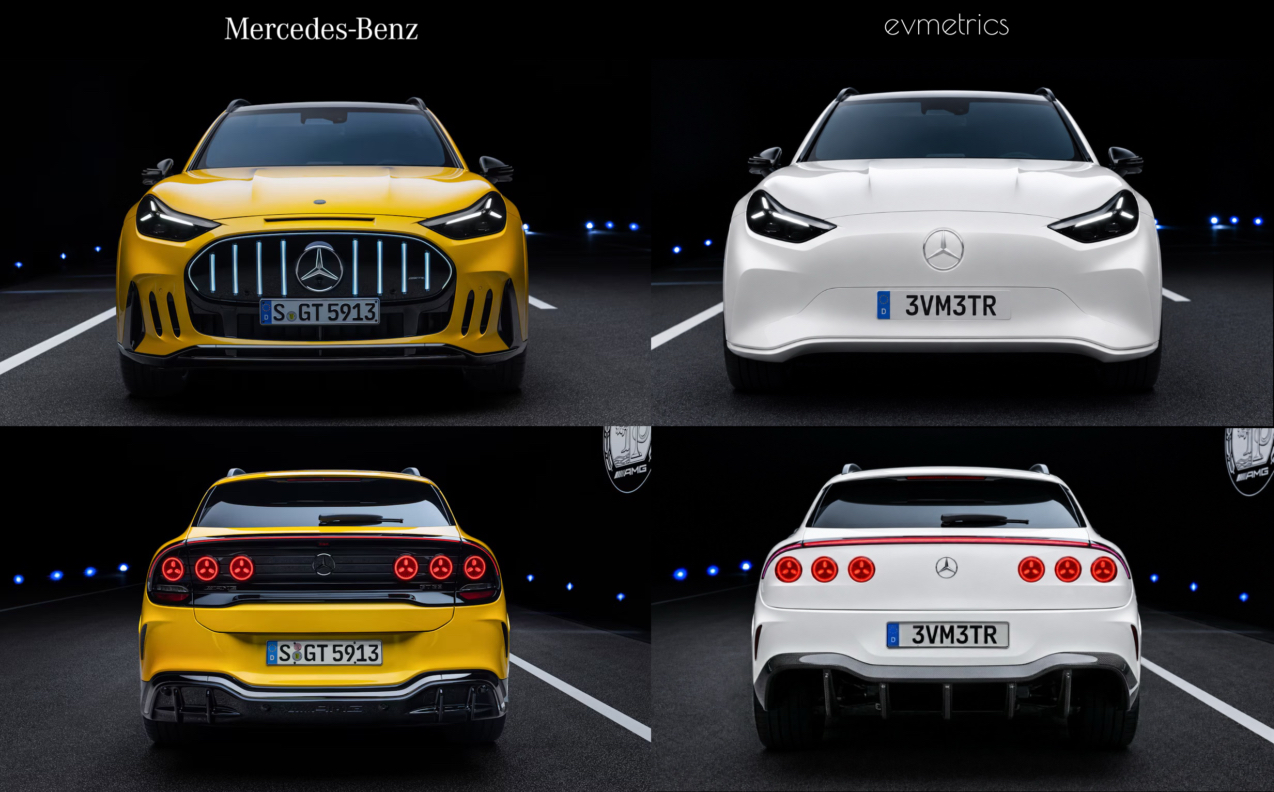
I am no car designer, this redesign is just to show that Mercedes no doubt made a deliberate decision to add all the busy chrome and garish details. My prompt was simple: keep the light bar and the six round lights exactly as they are, but cut them straight into the body instead of a black panel, blend the diffuser in and make the plate flush. At the front I dropped the grille altogether, leaving just the star and the plate on a smooth nose.
Now, I'll be the first to admit mine is not great. It follows the existing shape exactly so it inherits all the proportions, and without the grille the front winds up looking a bit generic EV, think Model Y. Deleting things won't fix proportions, that's a job for a design studio not a prompt. Still, the rear is cleaner, the lights read as one graphic instead of lights inside a frame inside a panel.
ICONIC
What got me thinking about all this is Mercedes' own Iconic Design book, featuring the Vision Iconic show car from October 2025, an Art Deco take on the 1930s that Gorden Wagener called "a sculpture in motion".
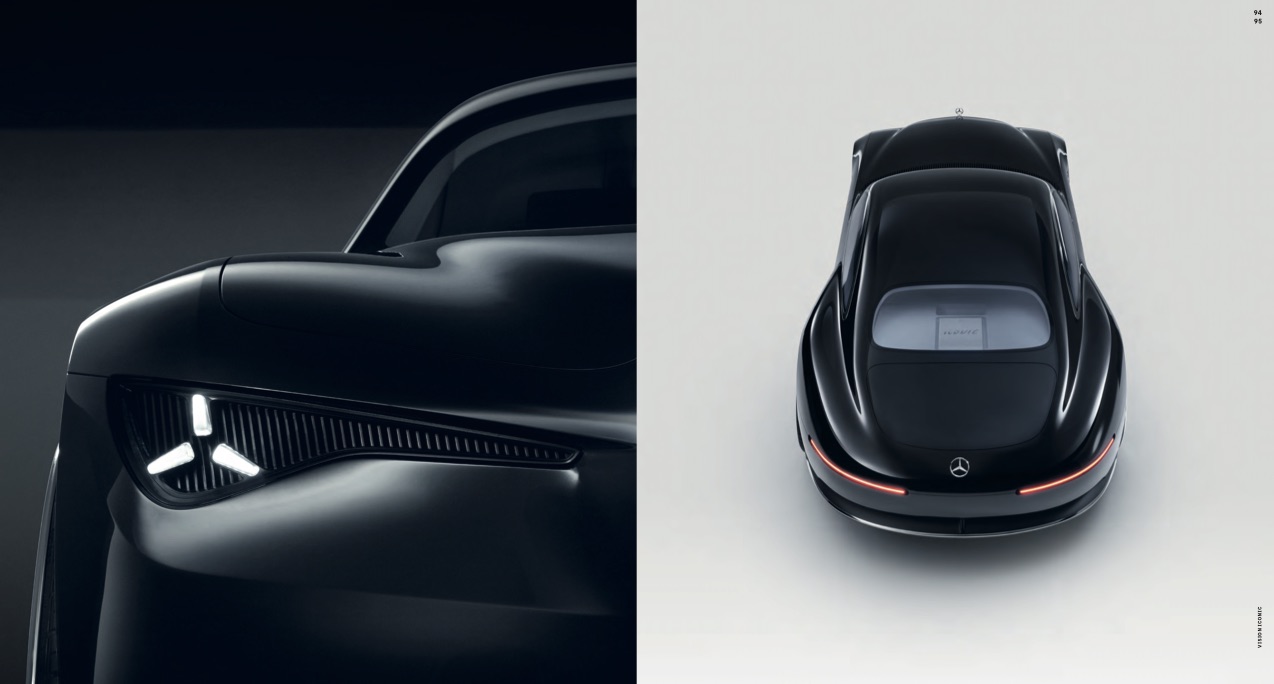
Look at the top down shot, one slim light line set into a rounded, uninterrupted tail, no black frame, no fake vents, no plastic diffuser, all the drama comes from the surfaces and the light. That is exactly the direction my rear edit goes in and the opposite of what the production GT SUV does.
ROADSTER
Two days before the GT SUV, Tesla finally unveiled the new Roadster, developed together with SpaceX of all things (electrek).
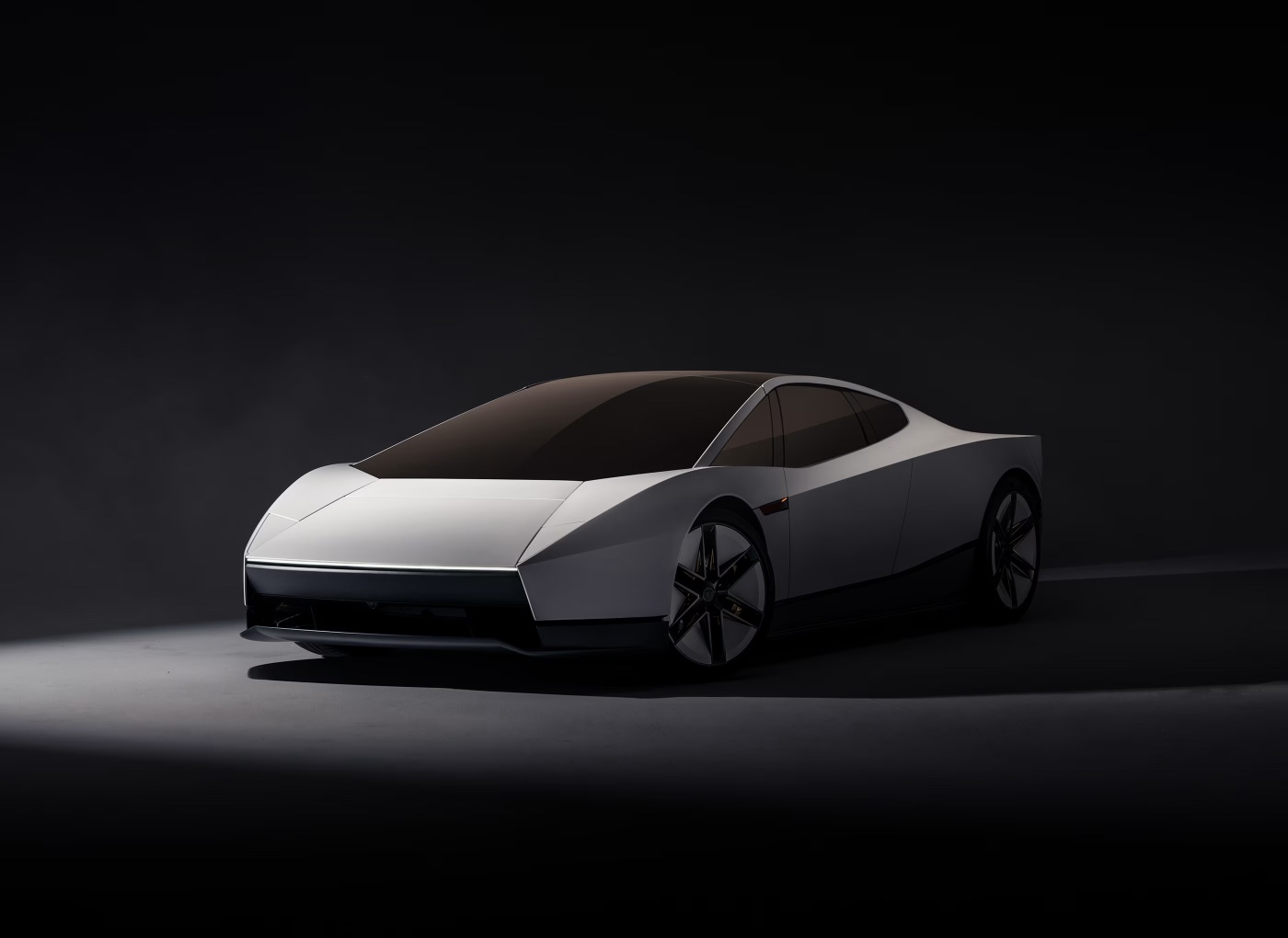
Say what you want of the new Roadster, the design is impeccable and it has absolutely nothing externally that does not serve a clear function, nothing is decoration. Hidden headlights, one sharp nose with no fake grille or vents, flush aero and active wings that only come out in Track Mode when the car actually needs the downforce.
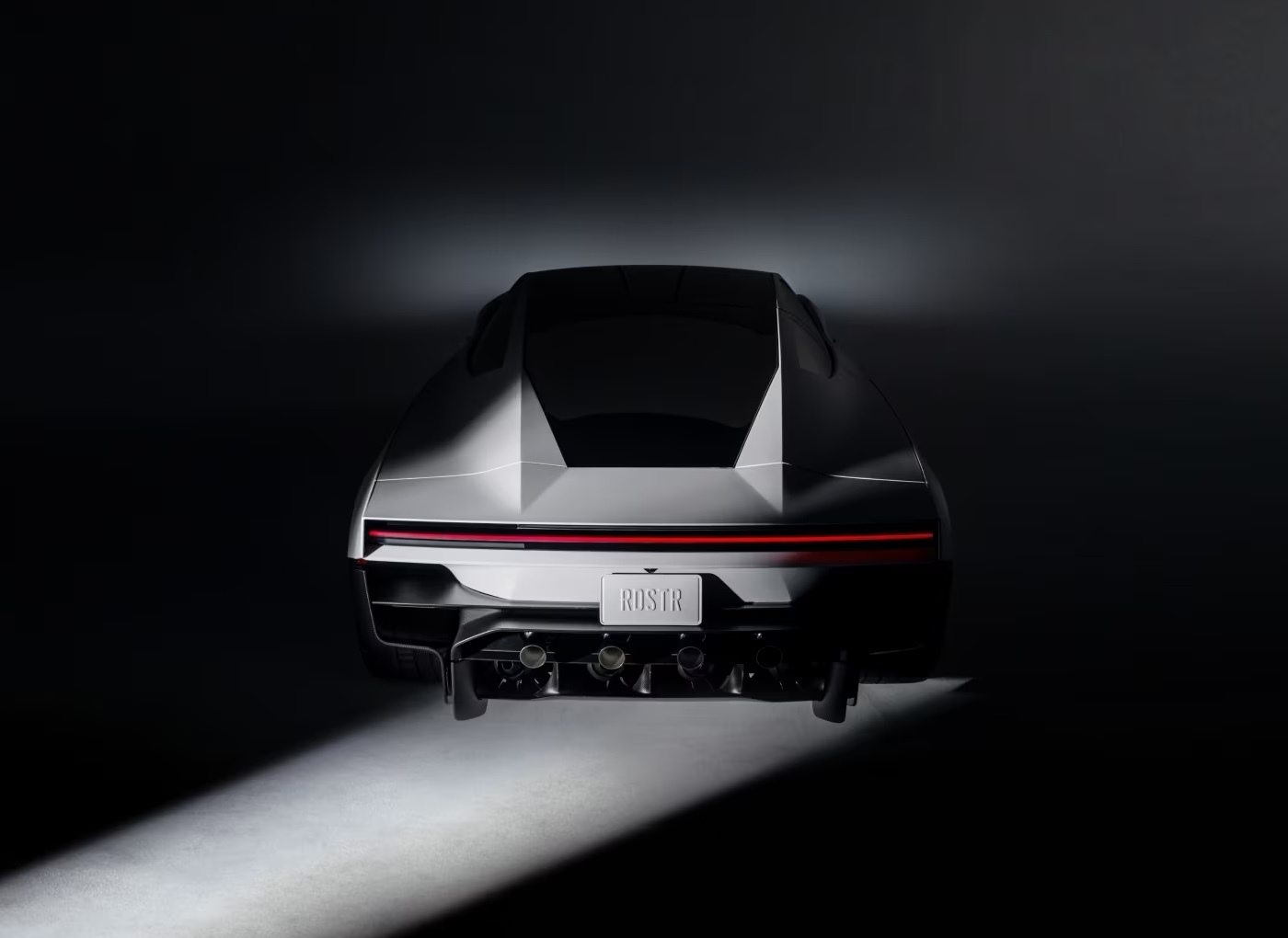
The rear looks just as busy as the AMG at first glance, except every one of those holes is doing something, they are the fans for the suction system and the cold gas thrusters. Above them one full length taillight, no frame and no six of anything. Whether it all makes it onto a public road is another story, but the way I see it the Vision Iconic gets to a clean design through sculpture, the Roadster through function, and the AMG GT SUV sits somewhere in between with a lot of decoration on top.
LUCE
There is a glaring lack of function behind all that black plastic, it sits exactly where the radiator vents and all kinds of historical intakes used to be on a petrol car, and an EV simply doesn't need most of them. Forcing plastic in there just makes it look like there was no forward thinking at all, a short sighted and awkward way of staying stuck in the past.
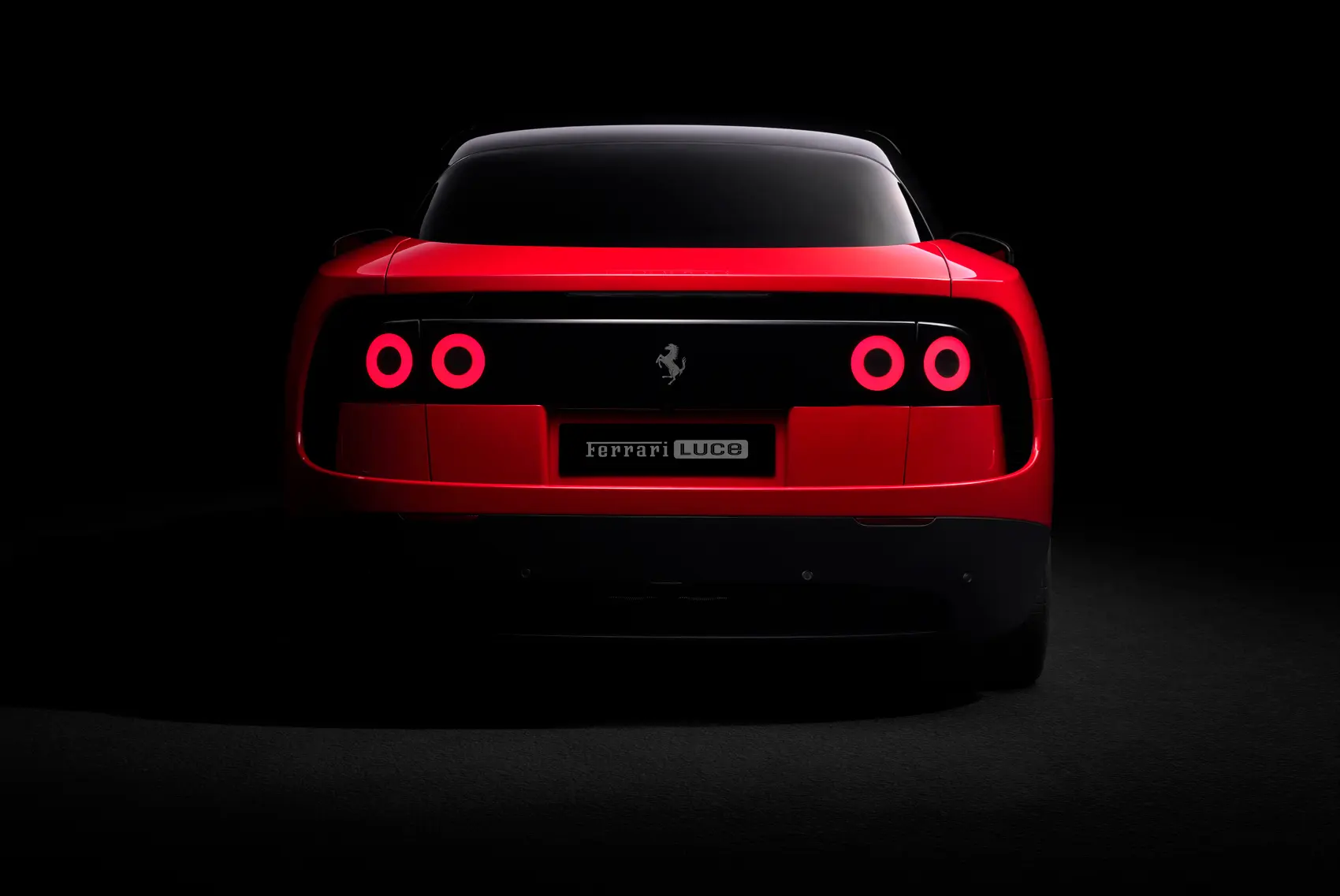
Strangely enough, the AMG design choice reminds me of the rear of the Ferrari Luce, it also puts its round lights in a black panel across the tail. Comparing the two though there is a big difference, on the Luce that black panel is the central glass house shell itself protruding through the bodywork, Ferrari's own description puts it like this:
The Ferrari Luce’s battery pack, chassis and body form an integrated system capable of optimising structural performance and efficiency. The chassis combines hollow castings, extrusions, and aluminium, while the body utilises extrusions and aluminium sheet metal.
A central cell houses the passengers, whilst the car’s mechanical and propulsive core is surrounded by bodywork elements that appear to float around it, including, notably, the two suspended front and rear wings.
So on the Luce the rear protrusion is a functional part of the car spanning the whole body, with the rear wing floating over it, as opposed to the AMG where it's decor plastered on top.
ENGINEERING
It's a shame really, the mechanical engineering in the first electric AMG is genuinely great, three axial flux motors, 800V and up to 710 kW charging is about as good as it gets right now, but that same level of thinking does not extend to the software or the aesthetic design of the car. The screens look like they were themed by a different team, and the body by one that hasn't noticed the radiator is gone. Ferrari and Tesla, love them or hate them, at least carried the same thinking all the way through.
SOFTWARE
Now more on the software failings. On the GT 63 and 55, AMGFORCE Sport+ "faithfully reproduces the sound of AMG V8 engines", recorded with 16 microphones from cars like the GT R, complete with simulated SPEEDSHIFT gear changes and seat shakers (press release). I see the simulated V8 as a distinct failing, because the car actually has something far more interesting to tell you about, those same two versions have torque vectoring between the rear wheels.
In my previous post, Can you hear torque vectoring?, I detailed how that could work. The torque vectoring controller shares its per-wheel torque commands with the audio system and the sound moves around the cabin towards the wheel being driven harder, getting louder the bigger the torque difference, so you can hear how hard the electronics are working before you run out of grip. McLaren even has a patent application for exactly that.
Failing that, it could at least have used something mechanically tied to the motors like the Luce. Ferrari puts a sensor in the rear axle housing that picks up the real vibration of the gears and electric motors, filters it and amplifies it inside the cabin and outside, distributed between the front and rear axles according to the torque delivered (Ferrari). Nothing is added that isn't already there.
Which brings me to the other missed opportunity, the axial flux motors themselves. They come from YASA, the British company Mercedes bought in 2021, and they are a big deal, flat pancake shaped motors that pack a lot more power into a lot less weight than the usual radial ones. Like any electric motor they have their own sound, a whine whose pitch follows the motor speed and changes with load, and with one at the front and two at the rear the car could feed that real sound back to the driver from where each motor actually sits, the same way Ferrari does with the Luce. That would be a sound only this car can make, a genuinely electric AMG sound.
Instead the V8 recordings and the plastic vent grille are part of the same theme, both are there to make the car look and sound like the petrol AMG it replaces rather than what it actually is. A recorded V8 on an axial flux EV is the sound equivalent of the black plastic where the radiator used to be, a nod to the past rather than something new.
Long story short: the GT SUV is not a bad looking car and what's underneath is top notch, but it is noticeably busier than the studies Mercedes itself holds up as iconic design. Mine is no Vision Iconic either, still I think the quickest way back to those studies is taking things away rather than adding more.